Quick answer
For a wildlife-focused ten-day Namibia self-drive trip, keep the route simple: Windhoek → Outjo → Okaukuejo → Halali → Namutoni → Otjiwarongo → Windhoek.
The suggested plan below includes nine nights, five of them inside Etosha, an arrival night and a final night in Windhoek. It splits the outward and return journeys rather than combining a long transfer with a flight.
Treat the driving allowances as planning budgets, not verified journey times. Confirm your exact accommodation entrances, road conditions, fuel availability and daily gate hours before traveling.
1. Decide whether ten days means ten days in Namibia
This itinerary assumes you arrive in Namibia on Day 1 and depart on Day 10. International travel before arrival and after departure is additional. If your ten-day allowance includes those flights, shorten the route rather than squeezing the same schedule into fewer days.
The plan suits travelers who want repeated wildlife-viewing opportunities and are comfortable doing their own driving. It deliberately leaves out a coast-and-desert circuit.
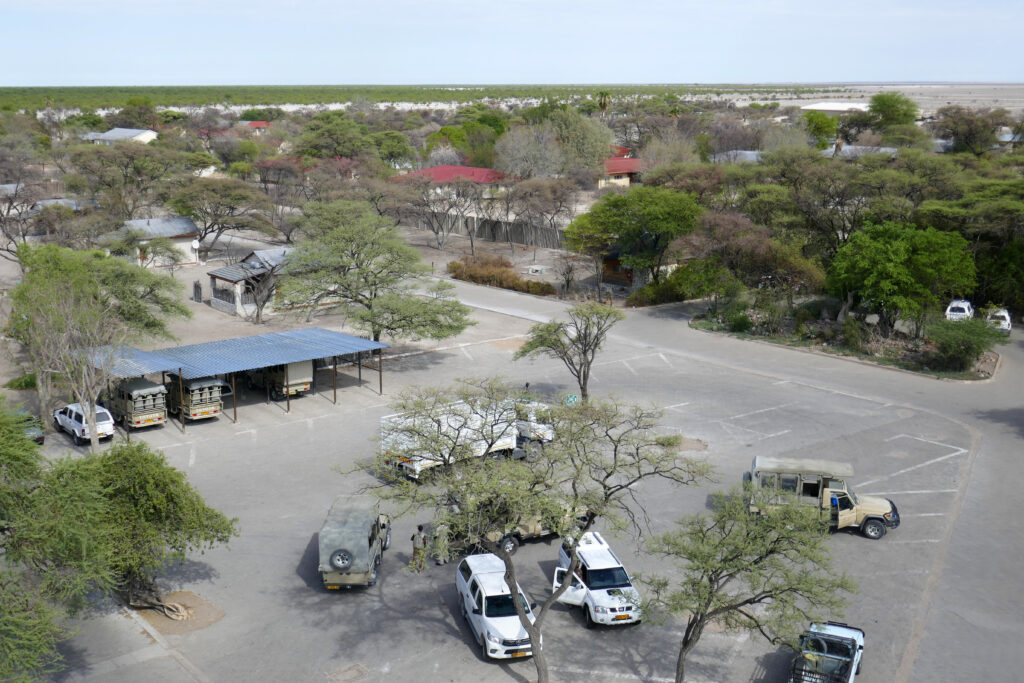
Etosha supports self-drive wildlife viewing, while Namibia Wildlife Resorts (NWR) lists accommodation at Okaukuejo, Halali and Namutoni, among other park camps. These three provide the overnight bases for this route. Guided drives are also available, giving a self-driver the option of taking a break from driving. (nwr.com.na)
Choose a simpler version if changing accommodation repeatedly feels tiring: stay longer at one or two Etosha bases instead of using all three. A guided trip may be a better fit if nobody in your party wants responsibility for navigation, vehicle checks and daylight arrival deadlines.
Before booking flights, decide:
- How many days you will actually have on the ground.
- Whether both arrival and departure days are usable.
- Whether you prefer rooms or camping.
- How many accommodation changes you are willing to make.
- Whether you can comfortably drive on the left, as required in Namibia. (namibia2go.com)
2. Follow a nine-night route with five nights in Etosha
The allowances below reserve time for breaks, fuel, paperwork and slower progress. They are suggested diary space—not measured driving times or promises about current road conditions. Replace them with a route check for your exact bookings.
| Day | Route and main task | Suggested allowance | Overnight |
|---|---|---|---|
| 1 | Arrive, collect vehicle if rested, buy supplies | Keep the day flexible | Windhoek |
| 2 | Windhoek to Outjo via Otjiwarongo | Reserve 4–5 hours including stops | Outjo |
| 3 | Outjo to Etosha’s southern entrance and Okaukuejo | Reserve 3–4 hours for transfer, entry and settling in | Okaukuejo |
| 4 | Local wildlife drives; return to camp for a break | No accommodation transfer | Okaukuejo |
| 5 | Move from Okaukuejo to Halali, viewing wildlife en route | Reserve most of the daylight day | Halali |
| 6 | Explore from Halali; optional guided drive | No accommodation transfer | Halali |
| 7 | Move from Halali to Namutoni | Reserve most of the daylight day | Namutoni |
| 8 | Leave through Von Lindequist Gate; continue via Tsumeb and Otavi | Reserve 4–6 hours including exit and town stops | Otjiwarongo |
| 9 | Otjiwarongo to Windhoek | Reserve 3–4 hours including a break | Windhoek |
| 10 | Refuel, return vehicle and reach the airport | Follow rental and airline deadlines | — |
NWR places Okaukuejo near the southern park entrance and Namutoni in eastern Etosha. Its fact sheets list rooms and campsites at all three proposed park bases. Availability for your dates must be checked separately. (nwr.com.na)
On Day 1, resist the temptation to drive north immediately after an overnight flight. Use the vehicle handover to understand the controls and emergency procedures.
On Day 3, make reaching camp the main objective. An afternoon wildlife loop is optional, not something the schedule depends on.
On Days 5 and 7, remember that moving camp is also a safari day. Leave after opening, travel steadily and prioritize reaching the next base over adding every possible detour.
On Day 8, avoid planning a substantial morning game drive before the return transfer. If you want another full eastern-Etosha day, add a night or remove something elsewhere.
3. Choose overnight stops for their location
For this route, accommodation location matters more than a long list of amenities.
Okaukuejo is the first park base. NWR describes it as its most accessible Etosha resort from Windhoek and highlights its floodlit waterhole. That creates a wildlife-viewing option without another self-drive outing, although sightings are never guaranteed. (nwr.com.na)
Halali is the middle base. NWR lists a floodlit waterhole and guided morning, afternoon and night drives. Two nights here let you unpack once and have a day without an accommodation transfer. (nwr.com.na)
Namutoni provides the eastern overnight before departure. NWR places it near Fisher’s Pan and lists a floodlit waterhole, swimming pool, rooms and camping. One night is a compromise: it gives this itinerary an eastern base without removing the return-journey break. (nwr.com.na)
Outjo and Otjiwarongo serve as transfer stops, not destinations that require a packed sightseeing schedule. Choose accommodation with a clearly identified entrance and check-in arrangements compatible with your route.
If you stay outside Etosha instead, ask the property for its actual driving distance to your intended gate. “Near Etosha” is not enough information for scheduling daily visits. Your planning must also respect the park’s sunrise-to-sunset restrictions. (nwr.com.na)
For camping, build setup and packing into the day. For rooms, check whether meals are included and whether the booked unit has cooking facilities. Do not assume that every chalet is self-catering.

4. Work backward from gate closing—not from a map estimate
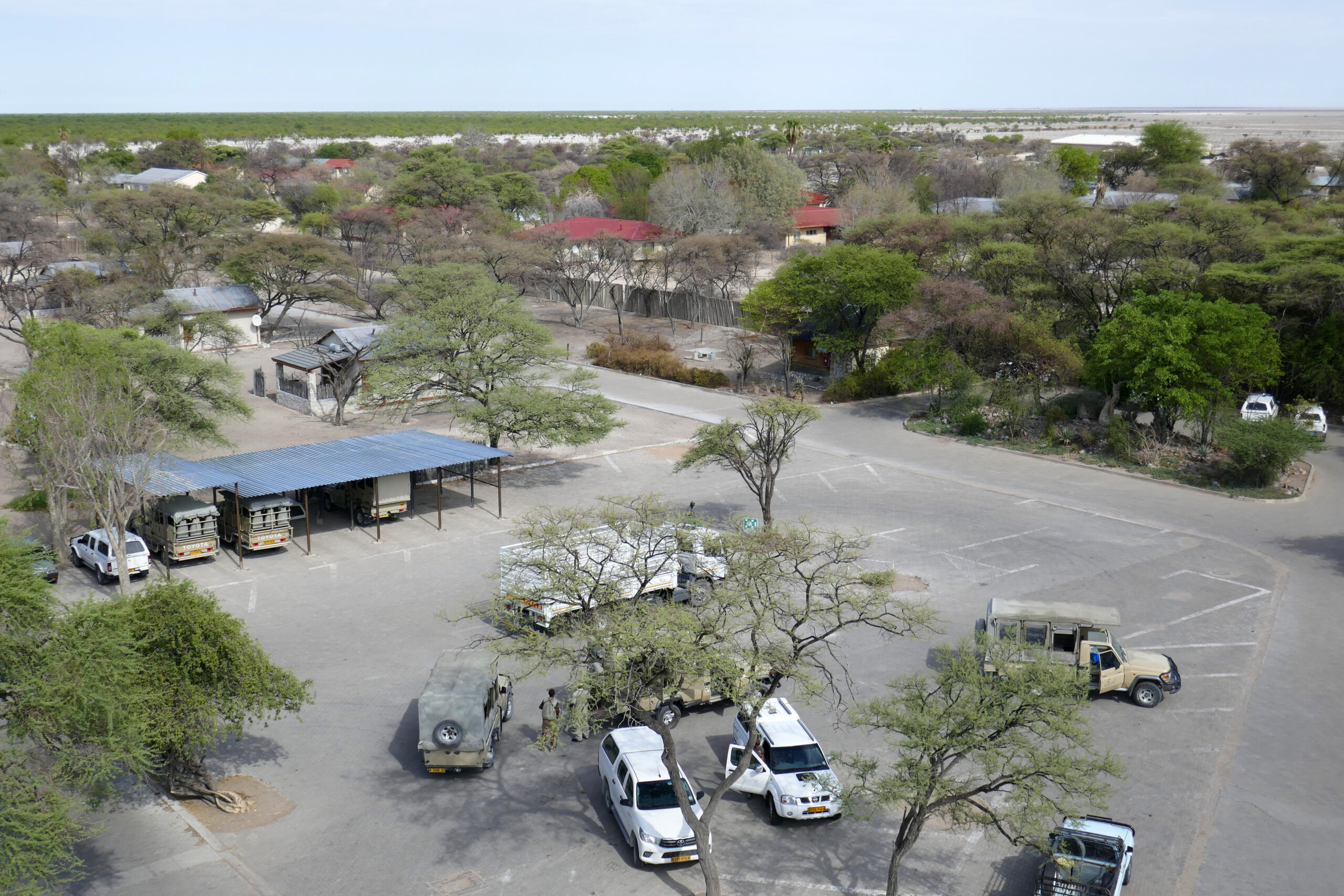
Etosha’s published park conditions prohibit leaving a rest camp before sunrise, reaching it after sunset or crossing the park boundary between sunset and sunrise. Obtain the exact opening and closing times for your travel date at entry and confirm them at camp. Do not rely on a fixed year-round timetable. (nwr.com.na)
A useful planning method is:
- Record the required camp-arrival or park-exit time.
- Set an earlier personal arrival target.
- Allow time for the remaining drive and possible delays.
- Stop adding detours when that allowance is used up.
An hour of spare daylight is a sensible editorial planning target, not an official grace period.
Outside the park, the rental company Namibia2Go advises avoiding night driving because of animals on roads and reduced visibility. Its driving guidance also warns that gravel has less traction and requires slower speeds and increased braking distances. (namibia2go.com)
Follow posted limits, your rental agreement and the conditions—not a speed chosen to make the itinerary work.
Current road conditions remain a departure-time check. The Roads Authority maintains Namibia’s national road network and publishes announcements; use its updates alongside advice from your rental company and accommodation. The sources reviewed here do not establish that every segment will be open or in a particular condition on your dates. (ra.org.na)
If a transfer looks too long, shorten the day’s wildlife route, retain an intermediate overnight or reverse the itinerary if bookings allow. Do not solve a late start by driving faster.

5. Plan fuel and rental cover before entering Etosha
NWR’s fact sheets list filling stations at Okaukuejo, Halali and Namutoni. That verifies the facilities—not whether your required fuel will be available when you arrive. Confirm supply before relying on a particular station. (nwr.com.na)
Refuel before park entry and reassess at each camp. Namibia2Go’s guidance notes that fuel is available in towns and along main routes, while remote areas have fewer stations. (namibia2go.com)
Make a fuel plan using the actual vehicle:
- Confirm its fuel type and usable tank capacity.
- Ask the supplier for consumption guidance for the intended roads.
- Include wildlife loops, not just accommodation-to-accommodation travel.
- Identify your next confirmed fuel option and an alternative.
- Maintain a reserve rather than planning to arrive nearly empty.
Do not buy or carry extra fuel containers without checking the supplier’s rules and safe transport arrangements.
A 4×4 is not automatically necessary for every Namibia road trip: Namibia2Go says ordinary cars can use paved routes to Etosha. However, ask the supplier to approve the complete itinerary, including park roads and accommodation access roads. (namibia2go.com)
Insurance wording deserves equal attention. Namibia2Go’s FAQ advertises zero-excess cover, while its published rental terms contain exclusions involving negligence, unauthorized drivers, unsuitable roads and off-road driving. This is one supplier’s example, not a rule for all rentals; request the contract applicable to your booking. (namibia2go.com)
At handover, inspect and record vehicle damage. Ask about tyre and windscreen cover, spare tyres, recovery charges, incident-reporting requirements and additional drivers. Have the supplier demonstrate the equipment rather than discovering how it works beside the road.
6. Worked example: trade Waterberg for two more Etosha nights
Suppose you have nine nights and want both Etosha and Waterberg. NWR places Waterberg Plateau Park east of Otjiwarongo and lists accommodation and activities there, so it is a genuine additional destination—not simply another roadside stop. (nwr.com.na)
Here is an illustrative allocation, not a quoted tour:
| Overnight allocation | Etosha plus Waterberg | Wildlife-first version |
|---|---|---|
| Windhoek: arrival and final nights | 2 | 2 |
| Outjo: outward transfer break | 1 | 1 |
| Etosha | 3 | 5 |
| Waterberg | 2 | 0 |
| Otjiwarongo: return transfer break | 1 | 1 |
| Total | 9 | 9 |
Removing Waterberg releases two nights. In the wildlife-first version, those nights let you stay twice at Okaukuejo and twice at Halali, rather than moving after every park night.
The benefit is more unhurried time, not a promised increase in sightings. You can revisit an area, pause at a waterhole, rest during the day or substitute a guided drive.
Keep Waterberg if it is a central reason for your trip. Drop it if your main goal is Etosha wildlife viewing and the extra accommodation change feels like an obligation. If both destinations matter equally, extending the trip is preferable to treating transfer days as spare sightseeing days.
7. Check the details that commonly derail the plan
Before paying non-refundable deposits, check these points:
- Flight days: Is Day 1 truly your arrival day, and is Day 10 your departure day?
- Accommodation sequence: Are all five Etosha nights confirmed in a workable order?
- Exact entrances: Have you mapped each property’s entrance rather than its general location?
- Daily deadlines: Have you allowed for gate procedures, camp check-in and daylight arrival?
- Fuel: Which stations have confirmed your fuel type, and what is the alternative?
- Rental permissions: Are the planned roads and every driver authorized?
- Budget: Have you separately allowed for accommodation, rental, fuel, park and vehicle fees, meals, guided activities and contingency costs?
Wildlife stops must follow park rules. Remain on designated roads, avoid disturbing animals and leave the vehicle only where expressly permitted. A blocked road is a reason to wait—not to drive around wildlife off-road. (nwr.com.na)
For self-catering, check veterinary restrictions before buying meat for the whole circuit. In its February 25, 2025 notice, the environment ministry prohibited taking raw meat out through several Etosha gates, including Von Lindequist, the exit proposed here. Reconfirm the rule before departure. (meft.gov.na)
The final test: if the plan needs a late arrival, uninterrupted fuel supply or unusually fast progress to work, simplify it. Five Etosha nights with manageable transfers are a stronger wildlife-first plan than a longer destination list with no room for delays.
Research checked October 10, 2026. Gate hours, road conditions, fuel supply, rental terms and availability require reconfirmation for your travel dates.