Quick answer
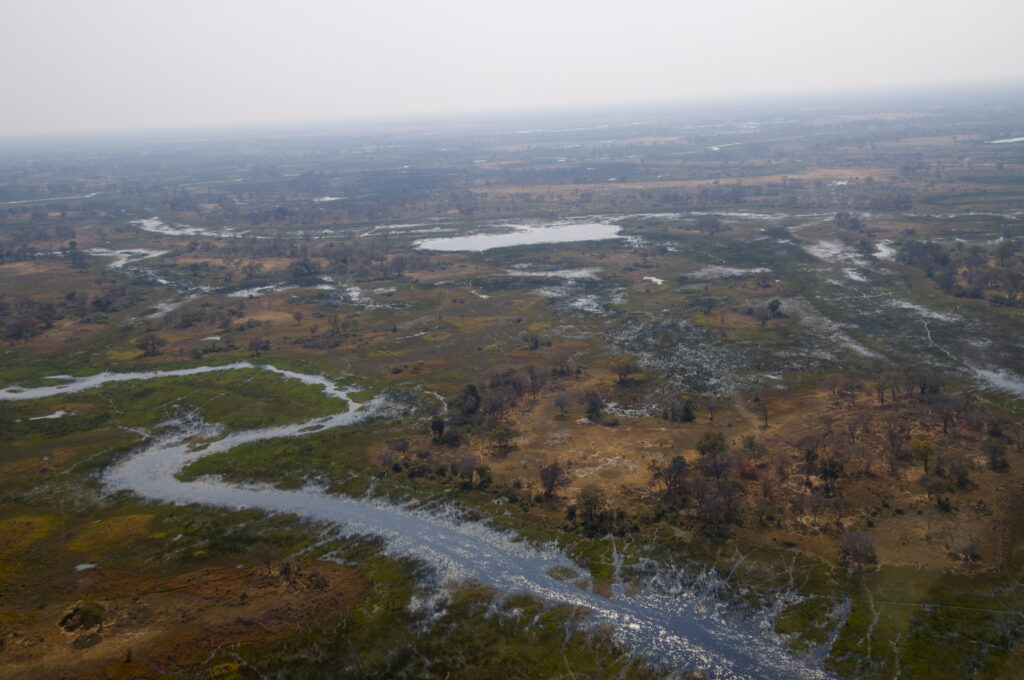
For a first Okavango Delta safari combining wildlife viewing and water activities, start by comparing June–September departures. These fall within Botswana’s dry season and overlap the Delta’s broad high-water period—but conditions vary by location and year. Local summer rain, mainly November–March, is not the same as the delayed flood arriving from Angola. Choose the camp’s activity mix first, then confirm conditions for your dates: a permanent-water camp can be more useful for mokoro outings than simply booking a supposedly “best” month. (botswanatourism.co.bw)
1. Why the Delta floods when Botswana is dry
Two different seasonal processes shape an Okavango safari.
Local rainfall falls over Botswana during the southern summer. Botswana Tourism Organisation identifies January and February as the main rainfall peak, with October and April transitional. Winter is generally dry, with cold nights and early mornings. (botswanatourism.co.bw)
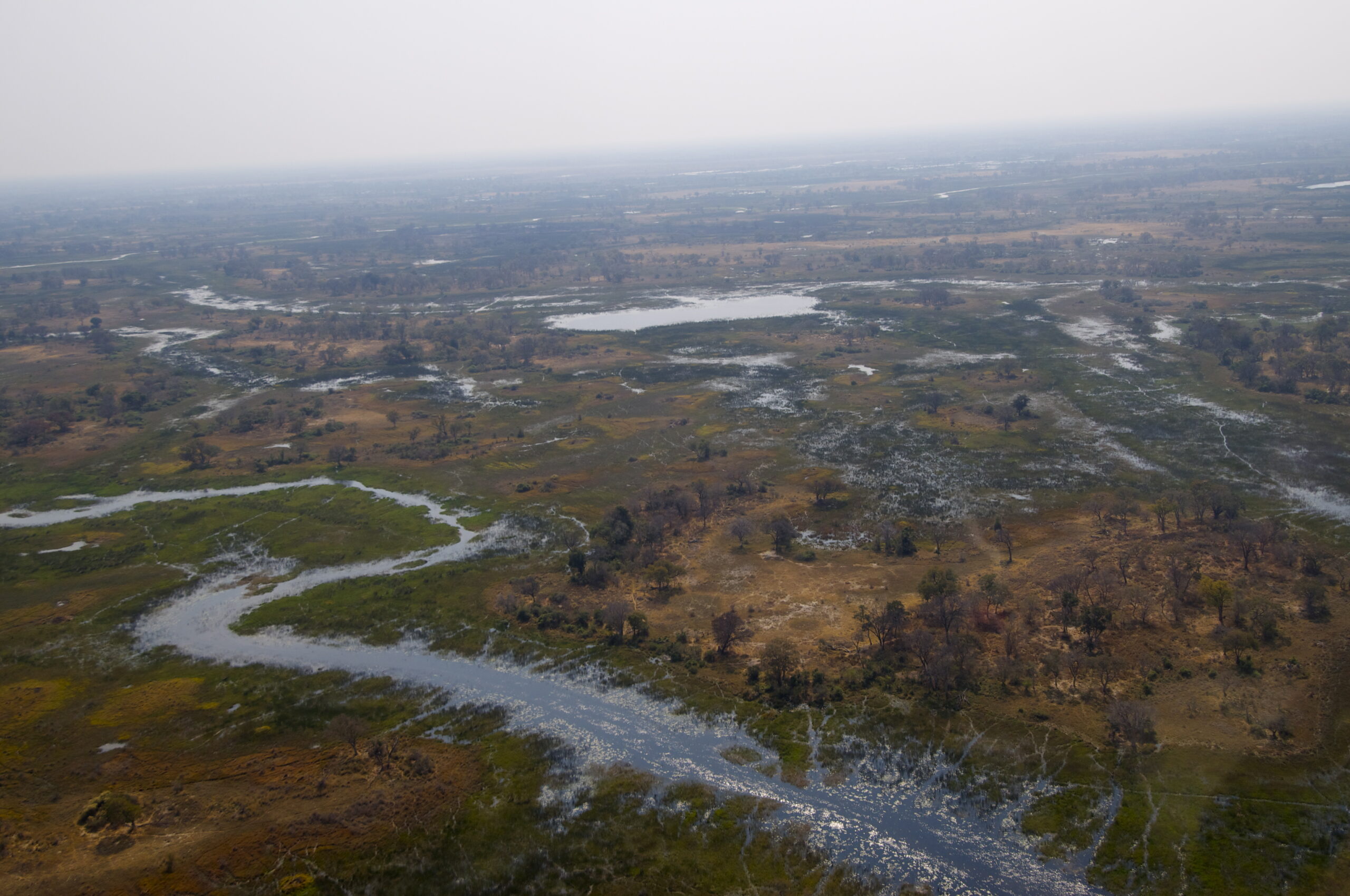
The annual flood pulse comes primarily from rainfall in the Okavango’s upstream catchment in Angola. Water travels downstream and spreads slowly through the Delta’s channels and floodplains. Consequently, extensive flooding occurs months after the local rainy season rather than neatly alongside it. UNESCO identifies this dry-season flooding as a defining feature of the ecosystem. (pmc.ncbi.nlm.nih.gov)
The word “peak” needs care. A hydrological study using a 30-year record describes the river flood wave peaking at the Delta inlet around April, but the maximum flooded area occurring around August–September. A later study describes the broader maximum-inundation period as July–September. These refer to different parts or measures of the system, not a single date when every camp reaches its highest water level. (hess.copernicus.org)
For planning, ask two separate questions:
- What weather is typical during my travel month?
- What water conditions are expected around my particular camp?
A rainy forecast for Maun cannot answer whether a seasonal mokoro channel elsewhere in the Delta is navigable.

2. What each seasonal window means for your safari
The following is a planning framework, not a forecast. It combines official climate guidance with published hydrological research; individual camps may experience a different timing or extent of flooding. (botswanatourism.co.bw)
| Travel window | Broad seasonal tendency | How to use it |
|---|---|---|
| November–March | Main local rainy period; the Delta’s total flooded area can be relatively low despite summer rain. | Consider this window if you accept summer weather. For essential water activities, investigate permanent-water camps. |
| April–May | Transition towards dry winter; the incoming flood does not reach all areas together. | Ask whether the flood normally reaches the camp’s activity channels by your dates. |
| June–August | Dry winter conditions overlap expanding floodwater and the broad high-water period. | Compare camps for a combined land-and-water trip; pack for cold early departures. |
| September–October | Late dry-season conditions; the flood may remain extensive or recede locally, while some downstream areas receive water later. | Check actual channel and track conditions rather than assuming all water activities end together. |
Botswana Tourism Organisation highlights drier conditions and lower grasses as advantages for wildlife visibility. That makes the dry season a sensible starting point for travelers prioritizing game drives, but it is not a promise of particular sightings. (botswanatourism.co.bw)
Do not automatically reject summer, either. Camp Xakanaxa’s operator specifically highlights spring and summer birding, when migratory birds breed. If birds matter more than a classic dry-season mammal-viewing itinerary, your shortlist may look different. (desertdelta.com)
3. Camp location matters as much as the month
The Delta contains permanent marshes, seasonally flooded plains and substantial dryland areas. Botswana Tourism Organisation describes perennial swamps giving way to seasonal marshes and flooded grasslands towards the lower reaches. A reservation labeled “Okavango Delta” therefore tells you too little about the activities available. (whc.unesco.org)
Distinguish three practical camp profiles:
- Water-focused: selected primarily for waterways, mokoro excursions and island walks.
- Mixed land and water: suitable for travelers who want vehicle safaris plus a verified water activity.
- Land-focused: selected primarily for game drives, with any water activity checked separately.
Published operator details illustrate the difference:
| Camp example | Verified published activity details | Planning implication |
|---|---|---|
| Camp Okavango | Advertises year-round water experiences, motorboat safaris, mokoro excursions and guided island walks; explicitly states that vehicle game drives are not possible. | Suitable to investigate for a water-focused stay, not as a substitute for a game-drive camp. |
| Camp Xakanaxa | Lists morning and afternoon game drives and motorized boat safaris. | A published boating option does not establish that mokoro excursions are offered. |
| Setari Camp | States that water surrounds its island year-round and lists boating and mokoro day trips. | Worth investigating when water activities are the main objective outside the broad high-water season. |
These are activity examples, not endorsements or confirmations that an outing will operate on a specific departure. (desertdelta.com)
Hydrological research also shows that local water levels depend on channel–floodplain interactions and changes within the system. A report that the Delta has a “good flood” should prompt a camp-specific question, not end the research. (hess.copernicus.org)
4. Choose dates around your main activity
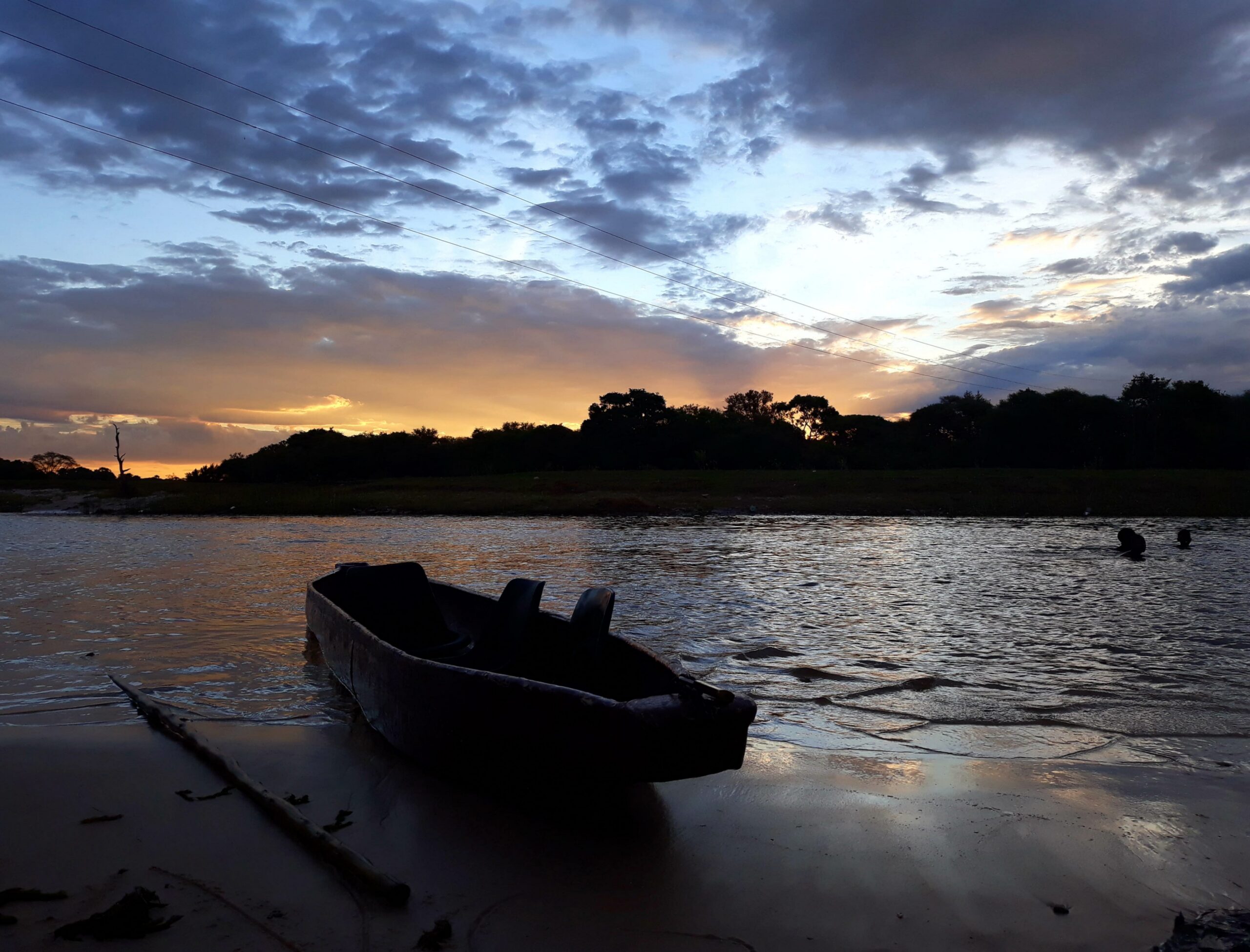
If a mokoro outing is essential: shortlist camps that explicitly list mokoro excursions. Then ask whether outings normally operate during your chosen month, whether they launch near camp, and what happens if the usual route is unavailable. Permanent-water operations provide a useful starting point, but “year-round water” is not an unconditional guarantee of every excursion. (desertdelta.com)
If game drives are essential: verify vehicle activities before considering the room, view or seasonal rate. Camp Okavango is a clear example of why this matters: its water-focused setting does not support vehicle game drives. (desertdelta.com)
If photography is the priority: define your subjects first. For large mammals from a vehicle, begin with dry-season departures and a game-drive camp. For water-level perspectives, choose a verified mokoro or boating operation. For migratory birds, investigate spring and summer opportunities. These are different photographic trips, even when they share the same destination. (botswanatourism.co.bw)
A suggested six-night structure for someone who wants both vehicles and mokoro outings is three nights at a game-drive camp and three nights at a water-focused camp. This is an itinerary design, not a published package. Request a transfer plan before committing, and ask which activities fit around arrival and departure times.
For a single-camp stay, use a stricter test: does that camp explicitly offer both of your must-do activities? Do not treat “water safari” as interchangeable with “mokoro.”

5. Access and operating conditions need a separate check
Low rainfall does not automatically mean dry tracks throughout the Delta: the annual flood spreads during the dry season. Equally, having water nearby does not establish that every boat route is usable. The system’s local variation is precisely why a destination-wide seasonal chart cannot replace operational advice. (whc.unesco.org)
Ask the camp or booking provider to explain the complete journey:
- Is arrival by road, light aircraft, boat, or a combination?
- What happens between the arrival point and camp?
- Does floodwater change that transfer?
- Could your intended route require an alternative?
- Who communicates changes before departure?
If self-driving, request current route instructions and an operating-condition check for the actual roads you intend to use. Do not infer that an interior camp is road-accessible because it appears near a track on a map.
Separate camp opening from activity availability. Machaba Camp’s published rate card identifies it as operating year-round, while its rates page states that water activities and walking depend on seasonal conditions, location and water levels. An open camp does not mean every advertised activity runs every day. (machabasafaris.com)
For families or travelers with mobility requirements, ask about the specific activity and transfer arrangements—not just whether the accommodation accepts your party.
6. Compare seasonal prices using the whole-trip total
Seasonal savings can be substantial at an individual camp, but season labels belong to the operator. They are not standardized flood categories.
Worked example: two adults sharing, three nights at Machaba Camp. Its published 2026 rates, checked on October 10, 2026, list:
| Rate period | Published rate per person, per night | Three-night base total for two adults |
|---|---|---|
| May 1–October 31, 2026 | US$1,315 | US$7,890 |
| November 1, 2026–January 10, 2027 | US$882 | US$5,292 |
The calculated base-rate difference is US$2,598. This is arithmetic using published rates, not a booking quote or confirmation of availability. (machabasafaris.com)
The 2026 rate card also lists a separate conservation and community levy of US$35 per person per night. For this example, that adds US$210 to either stay. It includes accommodation, meals, lodge activities, laundry, specified drinks and vehicle transfers to and from the airstrip; internal transfers and international flights are excluded. (machabasafaris.com)
Before choosing the cheaper dates, request an itemized total covering:
- Accommodation and any single supplement.
- Flights, road transfers and inter-camp connections.
- Levies and other compulsory charges.
- Shared versus private activities.
- Optional excursions, insurance and cancellation terms.
Then compare the activity you are buying. Saving on a camp whose seasonal mokoro outing cannot operate may be poor value if that outing is your main reason for visiting.
For lower-cost travel, request alternative dates at the same camp, then compare another camp with the same essential activities. That avoids confusing a seasonal discount with a fundamentally different safari.
7. Avoid these mistakes before paying a deposit
Mistake: booking the rainy season because you want floodwater.
Local rain and the upstream flood follow different timing. Check the camp’s channels, not just Botswana’s rainfall calendar. (pmc.ncbi.nlm.nih.gov)
Mistake: assuming the flood peaks everywhere in July.
Published research describes delayed propagation and differing measures of flood peak. Use a broad seasonal window, then investigate the specific location. (hess.copernicus.org)
Mistake: assuming boating includes mokoro excursions.
Camp Xakanaxa lists motorboat safaris, while Camp Okavango separately lists both motorboats and mokoro excursions. Ask for the activity by name. (desertdelta.com)
Mistake: treating a seasonal tendency as next year’s forecast.
Historical hydrology helps select dates; it does not establish future operating conditions at your camp. (pmc.ncbi.nlm.nih.gov)
Before paying, obtain written answers to these questions:
- Which of my priority activities normally operate on these dates?
- Which depend on seasonal channels?
- What is the alternative if water conditions prevent an outing?
- How will I reach camp, and can conditions alter the transfer?
- What is included in the final price?
- What restrictions apply to my party’s ages or mobility needs?
- When will I receive an updated conditions check?
The best month is the one that fits your activity priorities at the right camp. Use the seasonal calendar to build a shortlist, then use location, operating details and a complete quote to make the decision.
Seasonal evidence and published operator details checked October 10, 2026. This guide does not provide a live flood forecast.