Quick answer
Choose a private safari vehicle if controlling the pace, accommodating family needs or spending longer on photography is central to your trip. Choose shared game drives if you are comfortable making decisions as a group and the booking offers suitable seating at a better total price.
Before paying, get written confirmation of who shares the vehicle, the maximum passenger count, window access, guide arrangements and which journeys are private. Exclusive game drives do not necessarily mean exclusive transfers: Asilia’s published southern Tanzania terms explicitly allow shared transfers. (asiliaafrica.com)
1. Establish exactly what “private” and “shared” include
Ask the operator to describe your arrangement journey by journey—not simply label the holiday “private.”
Distinguish between these booking requests:
- A private guided road safari: your booking party has exclusive use of the specified vehicle and guide for the agreed itinerary.
- Private game drives at a camp: your party has its own game-viewing vehicle, but other parts of the trip need separate confirmation.
- Shared camp game drives: you join other guests for wildlife-viewing activities.
- A shared touring departure: you travel with a group through an itinerary, potentially changing vehicles for particular activities.
These distinctions matter in actual published terms. Asilia describes camp game drives in open-air 4×4 vehicles with a maximum of six guests and says private vehicles must be booked before arrival. Its southern Tanzania private-vehicle offer specifies that exclusivity applies to game drives, while transfers may be shared. (asiliaafrica.com)
Group travel also does not identify the vehicle by itself. Intrepid says most game drives on its Africa overland trips take place in the overland truck, although open-roof 4WD vehicles are used on some occasions. Do not assume a shared departure means a small safari jeep. (intrepidtravel.com)
Your first question should be: “Please identify the vehicle and sharing arrangement for airport transfers, travel between parks, airstrip transfers and every game drive.”
2. Check the seating plan, not just the vehicle name
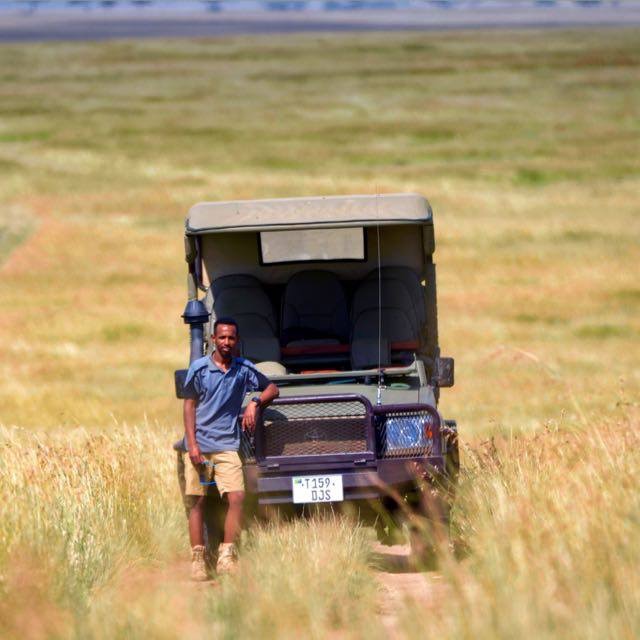
“Land Cruiser” is less informative than a photograph showing the actual seating layout.
Natural World Kenya Safaris, for example, describes its standard vehicle as a custom-designed 4×4 Land Cruiser with a pop-up roof, carrying a maximum of six passengers to provide window seats and roof access. That is an operator-specific specification, not a rule for every safari vehicle. (naturaltoursandsafaris.com)
Request a seating diagram or recent photographs, then check:
| Detail | What to confirm |
|---|---|
| Passenger limit | Maximum guests, excluding the guide and any other staff |
| Window access | Whether every passenger has a window-side seat throughout |
| Seat position | Whether a front passenger seat is included in the advertised capacity |
| Rotation | Whether guests change rows or sides between drives |
| Roof access | The viewing opening and how passengers share it |
| Comfort | Seat belts, back support, weather protection and room for your needs |
| Entry | Steps, handholds and assistance available when boarding |
Do not treat “window seat” as a promise of an unobstructed view in every direction. Ask how the guide handles sightings on the opposite side and whether safe repositioning is possible.
For photographers, also ask about camera supports, usable space beside each seat and access to equipment while driving. Asilia lists specialist photographic vehicles at selected camps, so a photography-focused setup should be confirmed separately rather than assumed from the word “private.” (asiliaafrica.com)

3. Match the arrangement to your traveling party
Start with the compromises you would find difficult, rather than assuming private is automatically better.
Couples: consider shared drives if you both want general wildlife viewing and are happy to follow the group’s pace. Request private use if one of you wants long photographic waits while the other needs shorter outings. Discuss that difference before booking; exclusive use will not resolve conflicting preferences within your own party.
Solo travelers: compare a shared departure against the complete private quote. Check room arrangements separately. Natural World’s FAQ defines a single-room supplement as a charge for occupying a room alone; sharing a vehicle does not, by itself, remove that accommodation charge. (naturaltoursandsafaris.com)
Families: ask for the camp’s written policy for each child’s age and each activity. Then explain the practical needs: shorter drives, meal timing, toilet stops and the ability to return early. Confirm whether private use is required, optional or unavailable. Do not assume buying exclusivity changes activity eligibility.
Photographers and birdwatchers: private use is worth considering when your interests require a different pace from general sightseeing. Ask whether the guide can support your priorities and whether the vehicle has the necessary setup.
Friends or larger families: request both arrangements. Your party might fit one vehicle—or need more than one. Check comfortable occupancy, luggage and viewing access before optimizing the price.
4. Separate daily flexibility from itinerary flexibility
Ask what you can change during a game drive and what requires an itinerary amendment.
Useful questions include:
- Can we choose departure times within permitted operating hours?
- Can we return early without affecting other guests?
- Can we request a picnic rather than returning for lunch?
- How are decisions made about staying at or leaving a sighting?
- Can we change the next day’s plan?
- Would changing parks or accommodation create additional charges?
Also confirm who guides each part of the trip. Ask whether one driver-guide accompanies the entire road itinerary, whether guides change at camps and who handles transfers. Natural World allows requests for a particular guide, but explicitly makes allocation subject to that guide’s availability. A request is not a guarantee. (naturaltoursandsafaris.com)
Private use does not override park regulations. Kruger’s published visitor rules require adherence to gate times, prohibit off-road driving and prohibit feeding or disturbing animals. Its general vehicle rules also restrict leaving vehicles and protruding through windows or sunroofs. Ask which rules and permitted activity arrangements apply to your particular booking; do not transfer one destination’s practices to another. (sanparks.org)
Agree on priorities with your guide, but leave safety and lawful wildlife positioning to them.
5. Confirm luggage space for every transport leg
Send the operator a realistic inventory: main bags, daypacks, camera cases, mobility equipment and any child equipment.
Then ask:
- Where will everything be stored between accommodations?
- Can camera equipment remain safely accessible?
- Will bags occupy passenger seats or foot space?
- Are there bag-size or weight limits for any flight?
- Is storage available for luggage you do not need on safari?
- Does a vehicle change introduce a different luggage limit?
Operator advice varies by transport arrangement. Natural World recommends soft-sided luggage for easier storage in its safari vehicles. Intrepid describes personal lockers or communal luggage compartments on its overland trucks and recommends a backpack or duffel rather than a hard-framed suitcase. (naturaltoursandsafaris.com)
Use these as prompts for questions, not universal allowances. Obtain the limits for your actual itinerary, including flights, rather than relying solely on what the road vehicle can carry.
For accessibility needs, request details about boarding, seat height, available assistance and equipment storage. “Private” answers who shares the vehicle; it does not establish that the vehicle is accessible.
6. Compare the complete premium—and what it buys
Request two itemized quotes using the same dates, parks, accommodation, room configuration and included activities. Otherwise, you may be comparing accommodation changes rather than the cost of exclusive transport.
Ask each quote to separate:
- Vehicle and guide charges.
- Accommodation and any single-room supplement.
- Park and activity fees.
- Transfers and flights.
- Meals and drinks.
- Taxes and other compulsory charges.
- Exclusions, cancellation terms and change fees.
There is no verified universal private-vehicle premium. Calculate yours from the matched quotes:
Additional cost per traveler = (private total − shared total) ÷ travelers in your party
If the operator instead quotes an exclusive-use surcharge per vehicle per day, confirm how many chargeable days apply—including arrival, departure and transfer days.
Worked example: two people versus a full party
Use Asilia’s published maximum of six guests as a seating example—not as a price quote. (asiliaafrica.com)
A couple considering a shared drive should assess whether they would be comfortable with four additional guests if the vehicle reaches that maximum. If they reserve the same six-guest layout exclusively, their two-person party leaves four guest places unoccupied. Subject to the actual layout, that may provide useful space as well as control over the group’s preferences.
A party of six occupying that layout privately gains exclusivity from unrelated guests, but no unoccupied guest seats. They should check equipment space rather than assume private use means more physical room.
The financial comparison is equally straightforward: divide a confirmed vehicle surcharge by two for the couple or by six for the larger party—provided the operator permits that occupancy and applies the same surcharge. No dollar amount should be assumed.
For a solo traveler seeking general wildlife viewing, a suitable shared quote may be better value. For a family needing the option to return early, that flexibility may justify a confirmed premium. If only part of the trip needs exclusivity, ask whether selected private drives are available and what conditions apply.
7. Get these answers in writing before paying
Copy this checklist into your booking inquiry:
- Exclusivity: Which journeys and activities are reserved solely for our party?
- Vehicle: What model, seating layout and maximum guest count apply?
- Viewing: Is a window-side seat guaranteed? Is there seat rotation?
- Guide: Who guides each leg, and is continuity guaranteed or only requested?
- Schedule: Which departure times, drive lengths and meal arrangements can change?
- Special needs: What written policies apply to children, boarding assistance and equipment?
- Baggage: Where are bags stored, and what limits apply to each transport leg?
- Costs: Is exclusivity included or charged separately, and on what basis?
- Shared departure: Is there a minimum group size, and what happens if it is not reached?
- Changes: Can the operator substitute a vehicle or alter the sharing arrangement?
- Cancellation: What happens to the exclusive-use charge if you cancel or shorten the trip?
Avoid three common booking mistakes: comparing unmatched headline prices, treating a vehicle name as a seating guarantee and assuming a private room means private activities.
Finally, ensure important promises appear in the booking confirmation—not only in an informal conversation. Asilia’s requirement to reserve private vehicles before arrival illustrates why exclusivity should be settled before travel. (asiliaafrica.com)
Choose the arrangement whose written terms fit your priorities. Pay for exclusivity when it solves a specific need; choose sharing when the seating, schedule and total price are a good fit.
Information checked October 10, 2026. Reconfirm operator terms and destination rules for your travel dates.